A Nation That Loves Its Boxing
There is nothing quite like a British fight night. From the intimate, sweat-soaked halls of York Hall in Bethnal Green to the roaring 90,000-seat cathedrals of Wembley Stadium, boxing in Britain carries an atmosphere that is part sporting event, part cultural pilgrimage. The chanting starts hours before the main event. Fans sing anthems borrowed from football terraces and repurposed for their fighters. The partisan energy splits arenas in half when two British fighters face each other, generating an electricity that opponents from overseas often describe as overwhelming. When Carl Froch knocked out George Groves under the Wembley arch, 80,000 voices erupted as one. When Anthony Joshua stopped Wladimir Klitschko at that same ground, the noise was heard from blocks away. These are not just sporting memories. They are shared national moments.
What makes British boxing culture truly special is the willingness of the fans to travel. When Ricky Hatton fought Floyd Mayweather in Las Vegas in 2007, over 30,000 British supporters descended on the Strip, outnumbering the arena's capacity by nearly two to one. They sang, they chanted, and they turned a Nevada casino town into a Manchester away day. It was not the first time, and it will not be the last. British boxing fans follow their fighters to New York, to Saudi Arabia, to Dusseldorf, to wherever the bell rings. The tradition of the "away day," thousands of loyal supporters crossing oceans to stand behind their own, is a uniquely British phenomenon with no real equivalent in world boxing.
At its heart, British boxing is rooted in working-class identity and fierce regional pride. Fighters represent their cities: Hatton was Manchester, Froch was Nottingham, Brook was Sheffield, Calzaghe was Wales. Fans follow them with a loyalty that mirrors football tribalism. Fight week builds over days: group chats light up, pub plans shift around the schedule, old highlights get debated over pints. From the grassroots gyms of East London to the stadium spectacles in Cardiff and Manchester, every generation produces new champions who carry the hopes of their communities. The fighters honored on this page are more than athletes. They are the pride of a nation that has loved this sport for centuries and shows no sign of stopping.
And then there is the food. No British fight night is complete without the rituals that surround it. Fish and chips from the local chippy before the doors open, wrapped in paper and eaten on the walk to the arena. The Sunday roast the next day, where the previous night's drama is replayed over Yorkshire puddings and gravy. Britain even adopted chicken tikka masala as its national dish in 2001, a testament to the same openness and cultural blending that has shaped British boxing itself. From Lennox Lewis's Jamaican-British roots to Amir Khan's Pakistani-British heritage and Prince Naseem's Yemeni-British identity, the story of British boxing is the story of a nation that draws strength from every corner of the world and makes it its own.
The Fighters
Some of the fighters who defined British boxing in the 21st century
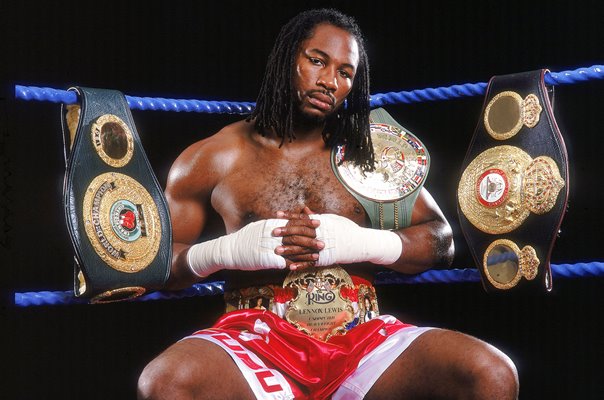 Photo: Sport Photo Gallery
Lennox Lewis
"The Lion"London, England
- The last undisputed heavyweight champion of the 20th century, Lewis closed his career in the 2000s with knockout victories over David Tua, Hasim Rahman, Mike Tyson, and Vitali Klitschko. He retired as reigning champion, one of the rarest acts of discipline in heavyweight history.
- Defeated Mike Tyson by knockout in round eight in June 2002, conclusively ending the Tyson era. A three-time heavyweight world champion who avenged both of his career losses.
- Born in West Ham, London and raised in Canada, he fought under the British flag throughout his career. Inducted into the International Boxing Hall of Fame in 2009.
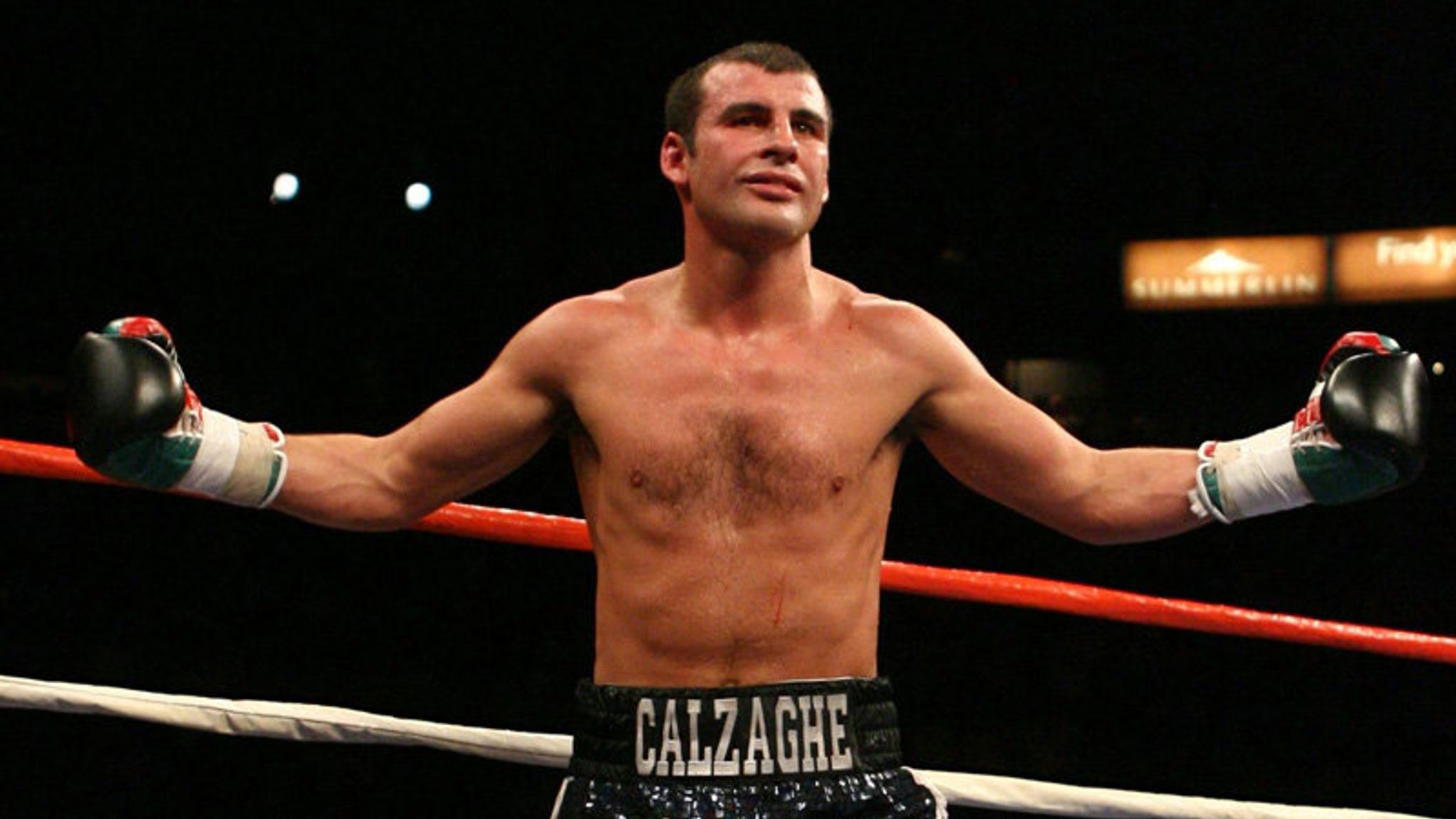 Photo: 365dm
Joe Calzaghe
"Pride of Wales"Newbridge, Wales
- Retired with a perfect 46-0 record, one of only fifteen world champions to walk away undefeated while still holding a title. Ricky Hatton called him 'the best British fighter we have ever had.'
- The longest-reigning super middleweight world champion in boxing history, holding the WBO title for over ten years with 21 successful defenses.
- Capped his career by defeating Mikkel Kessler to become undisputed super middleweight champion, then moved up to light heavyweight and beat American legend Roy Jones Jr. by unanimous decision.
 Photo: BoxingMetrics.com
Tyson Fury
"The Gypsy King"Manchester, England
- Dethroned Wladimir Klitschko in 2015, ending the Ukrainian's decade of heavyweight dominance. Named Upset of the Year and Fighter of the Year by The Ring magazine.
- Staged one of boxing's greatest comebacks after battling depression, bipolar disorder, and addiction. Returned to demolish Deontay Wilder, becoming only the third heavyweight after Patterson and Ali to hold The Ring title twice.
- The Wilder trilogy is one of boxing's great modern sagas: a controversial draw featuring Fury's miraculous rise from a devastating 12th-round knockdown, a dominant stoppage, and a brutal knockout named Fight of the Year by The Ring.
 Photo: BoxingMetrics.com
Anthony Joshua
"AJ"Watford, England
- Won Olympic super-heavyweight gold at London 2012 on home soil, then became the first British Olympic super-heavyweight gold medallist to win a professional heavyweight world title.
- Stopped Wladimir Klitschko at Wembley in April 2017 in front of 90,000 fans and 10.4 million television viewers. Named Fight of the Year by both The Ring and the Boxing Writers Association of America.
- A two-time unified heavyweight champion who became one of the biggest commercial draws in British sporting history, headlining multiple stadium shows with crowds exceeding 80,000.
 Photo: BoxingMetrics.com
Ricky Hatton
"The Hitman"Manchester, England
- Defeated the feared Kostya Tszyu in June 2005 at the MEN Arena in Manchester after eleven brutal rounds, one of the greatest nights in British boxing history.
- Took over 30,000 British fans to Las Vegas for his fight against Floyd Mayweather Jr. in December 2007. The 'Hitman's Army' turned the Las Vegas Strip into what observers described as Manchester in the desert.
- The ultimate people's champion: a working-class Mancunian who drank in the same pubs and sang the same songs as his supporters. His cultural impact on British boxing was arguably greater than any single result.
British boxing fans follow their fighters to the ends of the earth. That loyalty is something no other country in boxing can match.
Boxing Metrics Editorial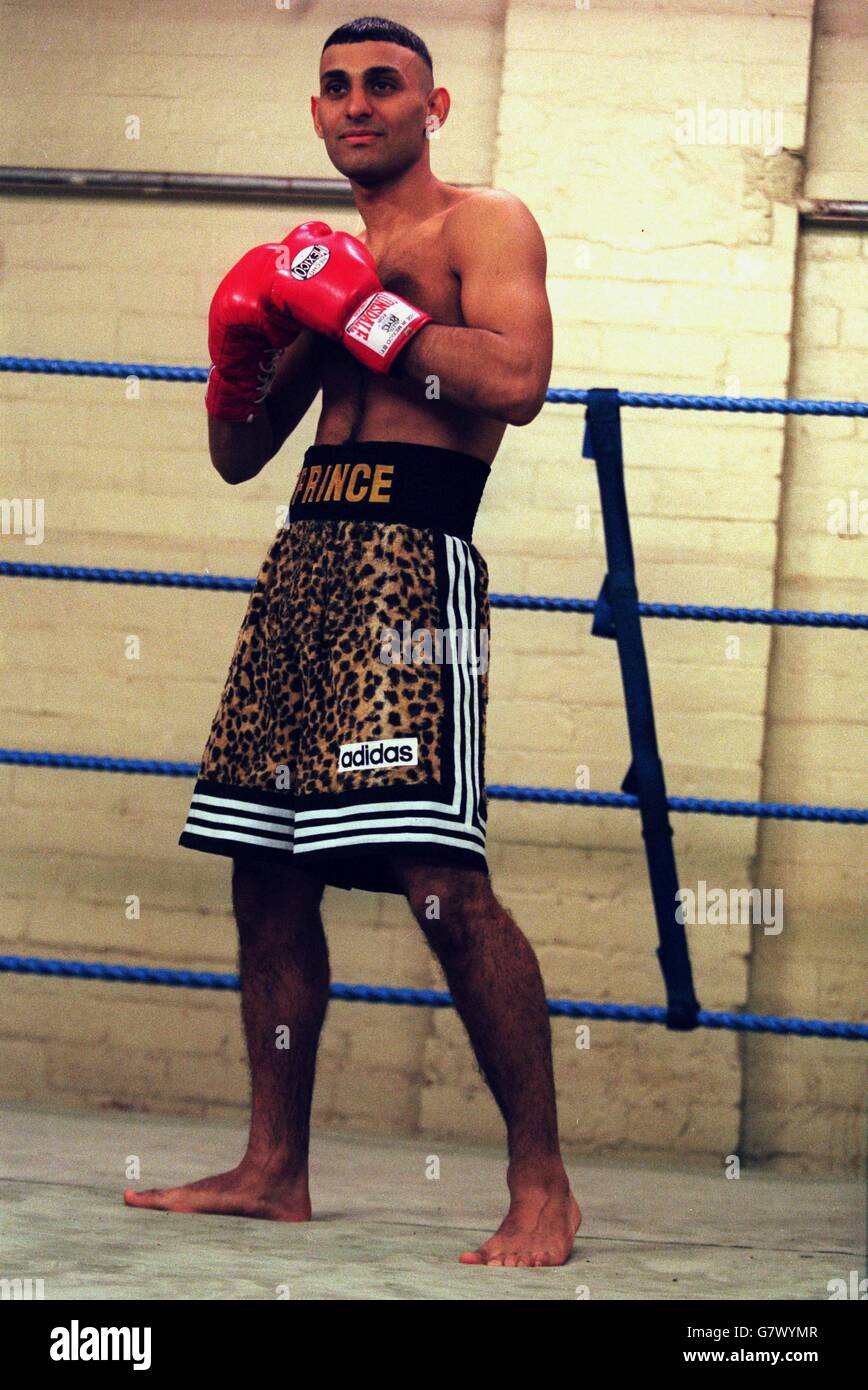 Photo: Alamy
Prince Naseem Hamed
"Naz"Sheffield, England
- One of boxing's greatest showmen, famous for ring entrances on a flying carpet, front-flipping over the ropes, and an unorthodox southpaw style that baffled opponents. Finished with a staggering 84% knockout ratio.
- Held the WBO, IBF, and WBC featherweight titles simultaneously, unifying the division in an era when that was exceptionally rare. Won the WBO belt at just 21 years old.
- Of Yemeni descent and raised in Sheffield, he was a trailblazing figure for British-Arab representation in sport. Inducted into the International Boxing Hall of Fame in 2015.
 Photo: BoxingMetrics.com
Carl Froch
"The Cobra"Nottingham, England
- Knocked out George Groves in round eight in front of 80,000 fans at Wembley Stadium in May 2014. BBC commentator Mike Costello called the finishing right hand 'the best punch you will ever see in a British boxing ring.'
- Held the WBC, IBF, and WBA super-middleweight world titles across his career, defeating elite opponents including Mikkel Kessler, Lucian Bute, Jermain Taylor, and Jean Pascal.
- Named BoxRec Fighter of the Year in 2012 and GQ Sportsman of the Year in 2013. His toughness and willingness to fight the best defined an era of super-middleweight boxing.
 Photo: Taqihz, CC BY-SA 4.0
Amir Khan
"King Khan"Bolton, England
- Won Olympic silver at Athens 2004 at just 17 years old, becoming one of the youngest boxing Olympic medallists in British history. The Bolton teenager became a national sensation overnight.
- After a devastating 54-second knockout loss to Breidis Prescott in 2008, staged a remarkable comeback, winning the WBA light-welterweight world title just twelve months later at age 22.
- Known for his blazing hand speed and a fearless willingness to fight anyone regardless of risk. Faced elite opposition including Mayweather, Canelo Alvarez, and Danny Garcia across a career that embodied courage over caution.
 Photo: cloudfront.net
Nicola Adams
"The Lioness"Leeds, England
- Won the first-ever Olympic gold medal in women's boxing at London 2012, defeating world number one Ren Cancan of China in the final. Made history on home soil in a sport that had only just been added to the programme.
- Successfully defended her Olympic title at Rio 2016, becoming the first British boxer to retain an Olympic gold in 92 years, since Harry Mallin in 1924.
- A trailblazer on multiple fronts: the first openly LGBT person to win an Olympic boxing gold, and the first female boxer to earn a British Boxer of the Year nomination. Retired undefeated as WBO flyweight champion. Awarded an OBE.
 Photo: BoxingMetrics.com
Savannah Marshall
"The Silent Assassin"Hartlepool, England
- The only boxer, male or female, ever to have defeated Claressa Shields, doing so as an amateur at the 2012 World Championships in China. That result fueled one of boxing's greatest rivalries.
- Became the first British female amateur world champion in 2012, then captured the WBO middleweight world title as a professional.
- Headlined the first-ever all-female boxing card in the United Kingdom against Shields at the O2 Arena in October 2022, a watershed moment for women's boxing in Britain.
From York Hall to Wembley Stadium, from the small halls of the Midlands to the bright lights of the O2, British boxing is alive, it is proud, and it is here to stay.
Boxing Metrics Editorial