The Craftsman's Nation
Japanese boxing began as an act of national recovery. When Yoshio Shirai outpointed Dado Marino in Tokyo in May 1952 to become Japan's first world champion, a country still rebuilding from the war found in him proof that it could compete with the world again. Seven decades later, Japan is not merely competing: it is the sport's modern superpower in the lower weight divisions. In the 2020s, Japanese fighters have held undisputed championships, headlined the Tokyo Dome, and occupied the top of pound-for-pound lists, a golden era with Naoya Inoue as its emperor and a production line of champions behind him.
The system is the secret. The Japan Boxing Commission licenses fighters through one of the sport's most disciplined structures, and legendary gyms, Ohashi, Teiken, Watanabe, Misako, operate less like businesses than like guilds, apprenticing fighters from the amateur ranks through world titles. At the center of it all stands Korakuen Hall in Tokyo, boxing's sacred small venue, where every Japanese champion since 1962 has learned the trade under the same low ceiling and roaring intimacy. Fighters speak of their first Korakuen main event the way musicians speak of their first night at a great concert hall.
Japanese boxing culture prizes craft above chaos. Fans arrive early, watch quietly, and erupt only when the moment earns it; the respect between fighters, the deep bow to all four corners of the ring, frames violence inside courtesy. Boxing owns two of the country's great television traditions: the champion's homecoming parade and the New Year's Eve fight card, when families gather after the year-end feast to watch world title fights before the temple bells ring. When Inoue headlined the Tokyo Dome in 2024, the first boxing there since Tyson and Douglas in 1990, forty-three thousand people attended what felt like a national ceremony.
And fight night eats well in Japan. Before a New Year's Eve card, the table fills with toshikoshi soba, the year-crossing buckwheat noodles eaten for longevity, alongside plates of sushi and sashimi for the occasion. At the izakaya where friends gather to watch the broadcast, yakitori skewers come off the grill between rounds, edamame and karaage keep the beer company, and a bowl of steaming ramen settles the night after the final bell. Japanese fight food, like Japanese boxing, is precise, seasonal, and taken seriously: craftsmanship on every plate.
The Fighters
From Japan's first world champion in 1952 to the Monster era at the Tokyo Dome
 Photo: BoxingMetrics.com
Naoya Inoue
"The Monster"Zama, Kanagawa
- The first male fighter in the four-belt era to become undisputed champion in two weight divisions, unifying every bantamweight title in 2022 and every super bantamweight title in 2023. A world champion in four divisions, he pairs sprinter speed with power that has no business existing below featherweight.
- His 2019 World Boxing Super Series final against Nonito Donaire was named Fight of the Year, won on the cards with a fractured orbital bone. In May 2024 he headlined the Tokyo Dome, the first boxing event there since Tyson versus Douglas in 1990, climbing off the canvas to stop Luis Nery in front of 43,000 fans.
- A product of the Ohashi Gym and trained by his father Shingo from childhood in Zama, Inoue sits atop pound-for-pound lists around the world, including the Boxing Metrics model. He is the face of a Japanese boxing golden era and, by many measures, the finest fighter his country has ever produced.
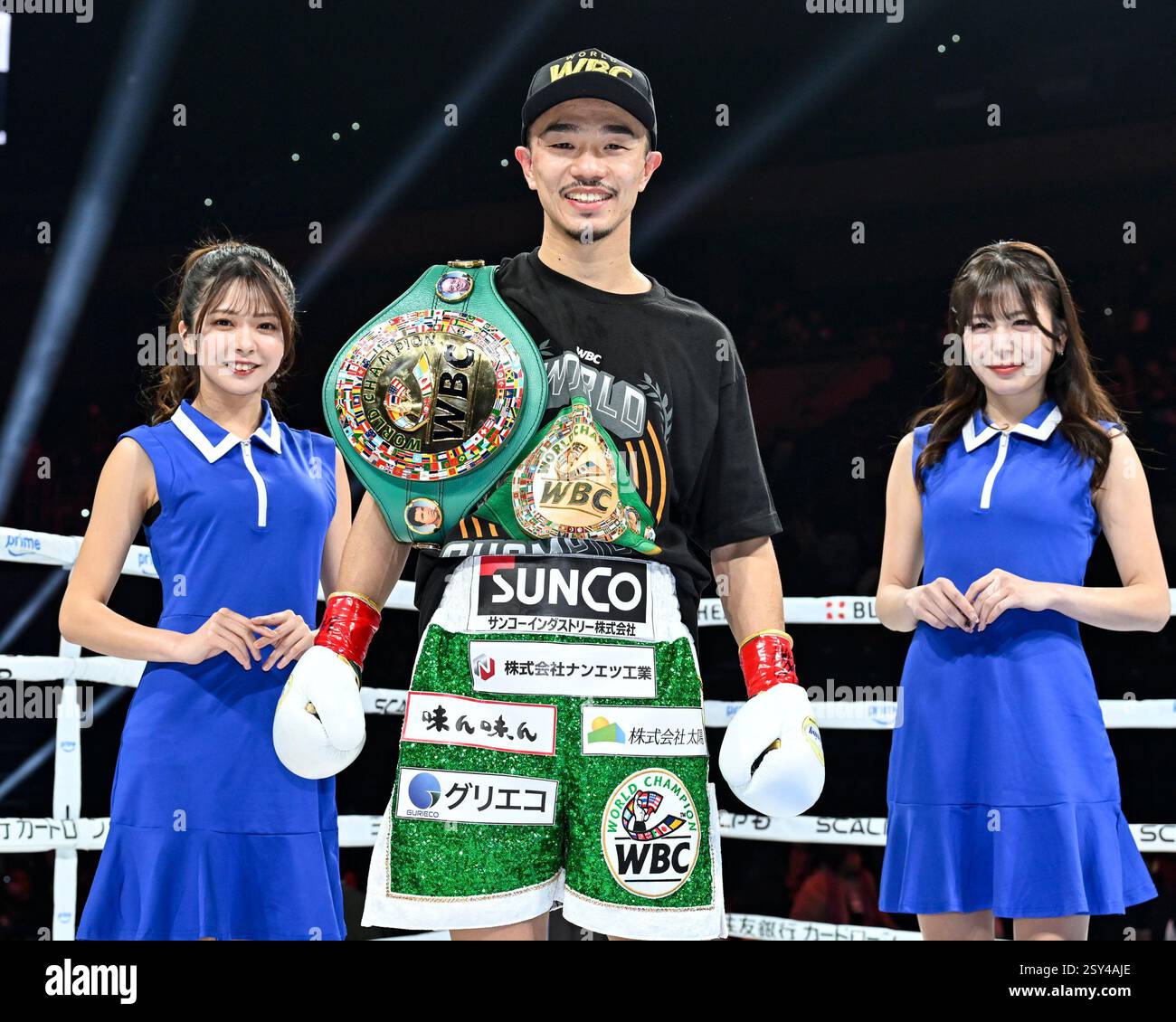 Photo: BoxingMetrics.com
Junto Nakatani
"Big Bang"Inabe, Mie
- A world champion in three divisions before his 27th birthday: WBO flyweight in 2020, WBO super flyweight in 2023, and WBC bantamweight in 2024, announcing each arrival with the kind of finishing power that earned his nickname.
- His one-punch, face-down knockout of Andrew Moloney in 2023 was hailed as one of the knockouts of the decade, a leaping left hand from a six-foot southpaw frame that simply should not fit in the flyweight divisions.
- Trained in Los Angeles by the late-blooming guru Rudy Hernandez, Nakatani is on a collision course with Naoya Inoue in what would be the biggest all-Japanese fight in boxing history: two undefeated superstars, one ring, and a nation holding its breath.
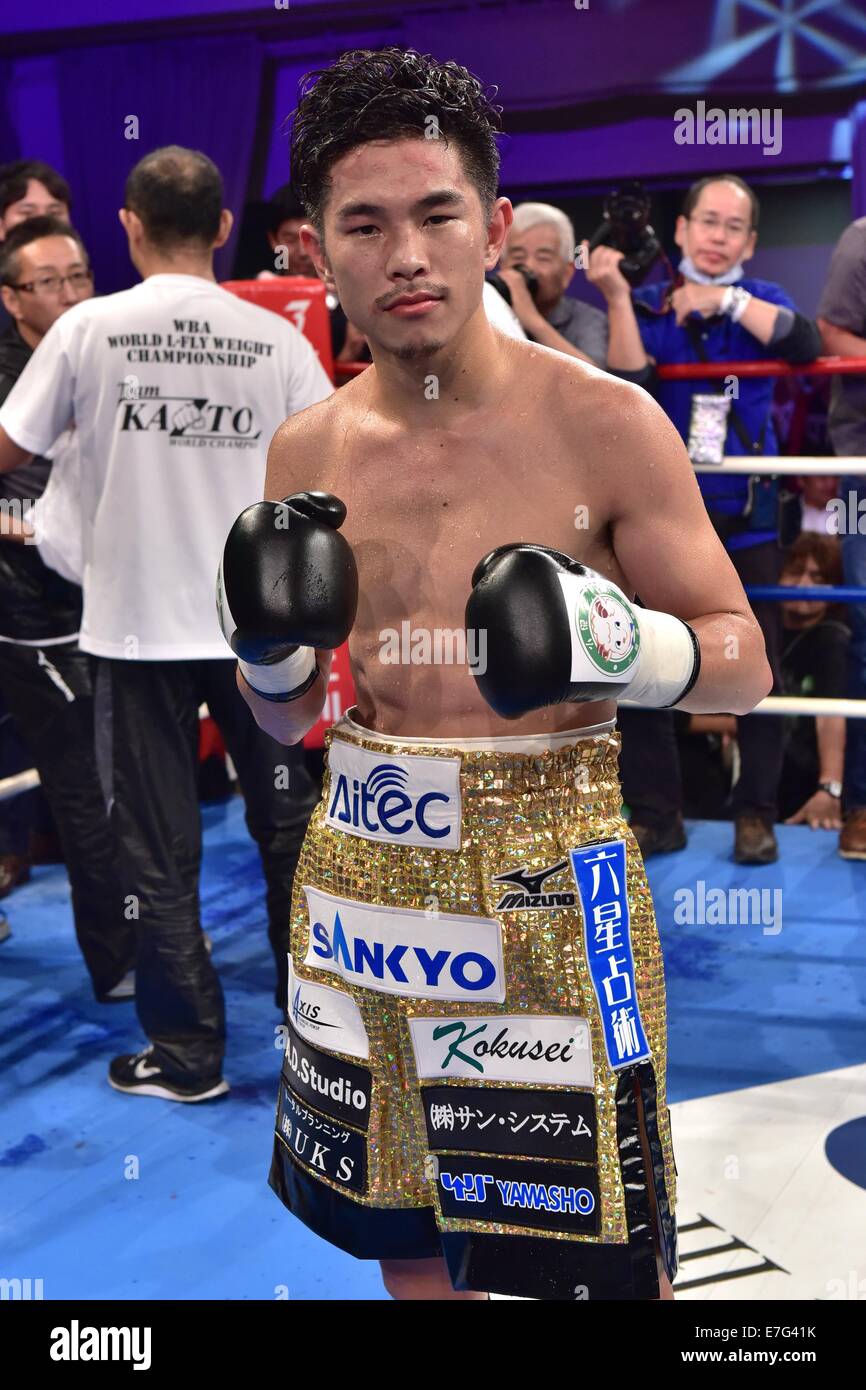 Photo: BoxingMetrics.com
Kazuto Ioka
"Kazu"Sakai, Osaka
- Became the first Japanese man to win world titles in four weight divisions, ruling at minimumweight, light flyweight, flyweight, and finally super flyweight with his 2019 stoppage of Aston Palicte.
- Boxing royalty by blood, he is the nephew of two-division champion Hiroki Ioka, and he honored the family trade with a textbook-perfect style: educated pressure, a ruthless left hook to the body, and footwork polished since kindergarten.
- For years the face of Japan's beloved New Year's Eve boxing tradition, Ioka headlined the holiday cards that families watch together after the year-end feast, and his longevity at world level across three separate decades makes him one of the most complete champions Japan has produced.
 Photo: Wikimedia Commons
Fighting Harada
"Masahiko"Setagaya, Tokyo
- Won the world flyweight title in 1962 at just 19 years old by knocking out Pone Kingpetch, then moved up to dethrone the legendary Eder Jofre for the bantamweight crown in 1965. Jofre was unbeaten in over 70 fights and considered untouchable; Harada beat him twice.
- His relentless, swarming pressure style, thousands of punches thrown behind a granite chin, defined an era of Japanese boxing and pushed him to the brink of a third divisional title in 1969, when many observers believed he deserved the nod against featherweight champion Johnny Famechon.
- Inducted into the International Boxing Hall of Fame in 1995 and long regarded as the greatest Japanese fighter of the twentieth century, Harada later served as president of the Japan Pro Boxing Association, shepherding the sport he had carried on his shoulders.
 Photo: Wikimedia Commons
Yoshio Shirai
"Japan's First Champion"Tokyo
- Became Japan's first world boxing champion in May 1952, outpointing Dado Marino in Tokyo just seven years after the end of the war. For a rebuilding nation, the victory was far more than sport: it was proof that Japan could stand tall on a world stage again.
- Defended the title four times, including a rematch victory over Marino, boxing behind a disciplined jab and immaculate footwork developed under the guidance of Dr. Alvin Cahn, an American scientist who rebuilt Shirai's technique from the ground up.
- His reign seeded everything that followed: within a generation Japan had built one of the world's great boxing infrastructures, and every Japanese champion since, from Harada to Inoue, stands on the foundation Shirai laid in 1952.
In Japan, a world title is not a prize. It is a responsibility, carried with a bow to all four corners of the ring.
Boxing Metrics Editorial Photo: Wikimedia Commons
Yoko Gushiken
"Kanmuriwashi"Ishigaki, Okinawa
- Won the WBA light flyweight championship in 1976 at age 21 and defended it thirteen consecutive times, a Japanese record that stood for decades and remains one of the great title reigns in the history of the lower weight classes.
- A southpaw pressure fighter from the remote island of Ishigaki in Okinawa, his nickname Kanmuriwashi, the crested serpent eagle, comes from a bird native to his island home. He carried Okinawa, long Japan's poorest prefecture, to the top of the boxing world.
- Retired after his only career loss and became one of Japan's most beloved television personalities, his gap-toothed grin a national treasure. The International Boxing Hall of Fame inducted him in 2015, sealing the legacy of a fighter Japan never stopped adoring.
Jiro Watanabe
"The Southpaw Master"Osaka
- Ruled the super flyweight division through the mid-1980s, winning the WBA title in 1982 against Rafael Pedroza and then adding the WBC version in 1984 by beating Olympic medalist Payao Poontarat, holding both versions of the crown in an era when that was nearly impossible.
- Made double-digit successful defenses across his WBA and WBC reigns, turning Osaka into a fortress that the world's best super flyweights visited and left empty-handed.
- A precise, patient southpaw craftsman, Watanabe was the bridge between the postwar generation of Japanese champions and the golden lower-weight era that followed, and historians consistently rank him among the finest super flyweights who ever lived.
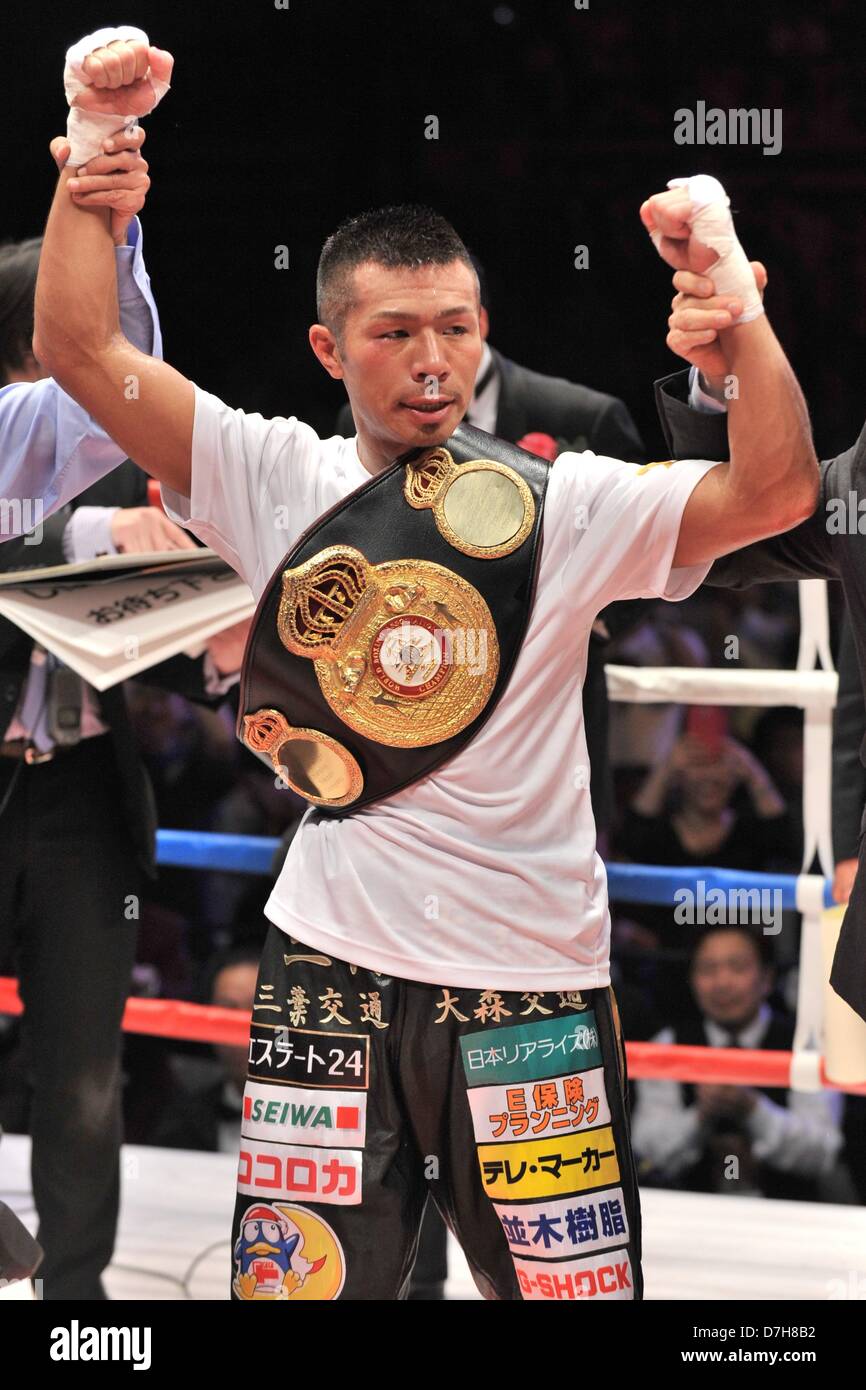 Photo: BoxingMetrics.com
Takashi Uchiyama
"KO Dynamite"Saitama
- Won the WBA super featherweight championship on New Year's Eve 2009 by stopping the unbeaten Juan Carlos Salgado, then defended the title eleven times across six years, one of the longest championship reigns in Japanese boxing history.
- His nickname was earned honestly: a thudding straight right hand and a knockout percentage north of eighty percent made him the most feared puncher Japan had produced above featherweight, in divisions where Japanese fighters were not supposed to carry that kind of power.
- Fought his entire championship career at home, turning Tokyo's Ota-City General Gymnasium into an annual ritual, and his reign at 130 pounds expanded Japanese fans' belief in what their champions could achieve in heavier divisions.
 Photo: BoxingMetrics.com
Shinsuke Yamanaka
"God's Left"Konan, Shiga
- Held the WBC bantamweight championship for six years and twelve defenses, second only to Yoko Gushiken's thirteen among Japanese male champions, headlining in an era when Japan's bantamweights were the envy of the world.
- His left straight was so devastating and so precise that Japanese fans and media simply called it God's Left; it produced knockouts against world-class opposition including the brilliant Panamanian Anselmo Moreno.
- His reign ended in controversy against Luis Nery, who failed a doping test after their first fight and then missed weight for the rematch, but Yamanaka retired with his reputation intact: a quiet, humble craftsman who let twelve title defenses do the talking.
 Photo: BoxingMetrics.com
Kenshiro Teraji
"The Amazing Boy"Joyo, Kyoto
- Won the WBC light flyweight championship in 2017 and built one of the division's great modern reigns, then unified the WBC and WBA titles in 2022 by stopping fellow Japanese star Hiroto Kyoguchi in an all-Japan unification for the ages.
- Avenged the only loss of his career in emphatic style, knocking out Masamichi Yabuki in their 2022 rematch to reclaim his title, the mark of a champion who treats defeat as a data point rather than a verdict.
- The son of a Japanese amateur boxing standout, Teraji later moved up to capture the WBC flyweight crown, extending a career that has quietly placed him among the finest fighters of Japan's golden generation and a fixture of its biggest New Year's Eve cards.
From Shirai's victory in a rebuilding Tokyo to Inoue under the Dome lights, Japanese boxing is seventy years of craft, honored one defense at a time.
Boxing Metrics Editorial